


How Can Choosing the Wrong Greenhouse Film Affect Agricultural Yields?
Choosing the wrong greenhouse plastic disrupts the climate balance inside the greenhouse, leading to light loss, heat fluctuations and significant yield reductions. Unsuitable greenhouse plastic is one of the most costly mistakes that directly affects agricultural yield, yet one that most producers fail to notice in the first season.
So, choosing the wrong greenhouse plastic;
- How does it disrupt the balance of temperature and humidity inside the greenhouse?
- Why does it reduce plant growth and product quality?
- Why does it pose a greater risk, particularly in hot and humid regions such as Antalya?
Incorrect use of greenhouse plastic most commonly causes the following problems:
- 🌡️ Excessive daytime heating, sudden night-time cooling
- ☀️ Reduced light transmission and slowed photosynthesis
- 💧 Increased condensation and dripping, risk of fungal diseases
- 📉 Plant stress and inevitable yield loss
So, is it sufficient to simply choose thick greenhouse plastic, or does the LD (Light Diffusion) feature, which distributes light more evenly, really affect yield? Here are the details…
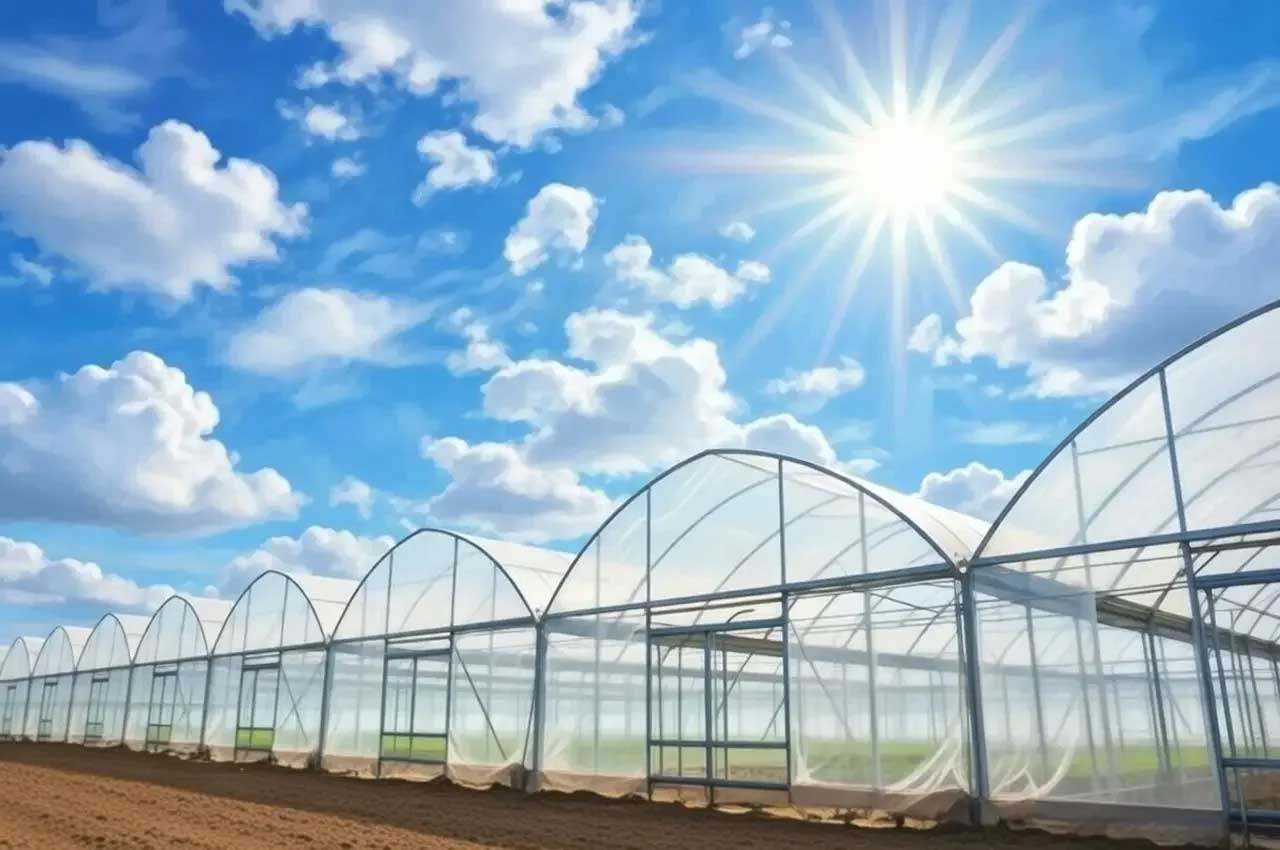
Agricultural Consequences of Choosing the Wrong Greenhouse Plastic
Choosing the wrong greenhouse plastic may not be noticeable in the short term, but it leads to structural problems that directly affect production in the long term.
1. Insufficient Light Transmission
The light transmittance of greenhouse plastic is critical for plants to perform photosynthesis. Plastics that do not transmit enough light or yellow over time:
- Slows plant growth
- Reduces flowering and fruit set
- Decreases product quality and overall yield
Bu nedenle sera naylonu bitkilere etkisi değerlendirilirken yalnızca kalınlığa değil, ışık kalitesine de odaklanılmalıdır.
2. Incorrect Thickness (Micron) Selection
The thickness of greenhouse plastic directly affects the climate balance inside the greenhouse. One of the most common mistakes is choosing microns without considering the climate and usage period.
| Greenhouse Plastic Thickness | Recommended Application | Average Lifespan | Impact on the Greenhouse Climate |
|---|---|---|---|
| 150 – 180 Mikron | Temperate regions, seasonal greenhouses | 1 – 2 year | Limited heat retention, susceptible to fluctuations |
| 200 – 250 Mikron | Cold regions, commercial production | 2 – 4 year | More stable temperature and light balance |
| 250 Microns and above | Professional greenhouses | 4–5 year+ | Maximum heat retention and climate control |
Therefore, the answer to the question “How many microns should greenhouse plastic be?” varies depending on climate conditions, product type, and duration of use. Choosing the wrong micron directly causes yield loss by disrupting the heat balance inside the greenhouse.
3. Use of Nylon Without UV Additives
UV-stabilized greenhouse plastic increases resistance to the sun’s harmful rays. Nylon without UV stabilizer:
- Wears out faster
- Causes yellowing and cracking
- Significantly shortens the lifespan of greenhouse plastic
This situation both increases maintenance costs and disrupts production continuity.
What Are the Properties of Greenhouse Plastic?
The following key features must be considered when selecting the right greenhouse plastic:
- High and balanced light transmission
- UV additive
- Appropriate micron thickness
- Tear resistance
- Long service life
- Raw material suitable for agricultural production
These characteristics directly determine the durability and efficiency of greenhouse plastic.
What Are the Uses of Greenhouse Plastic?
Greenhouse plastic is used in different production scenarios:
- Vegetable greenhouses (tomatoes, peppers, cucumbers)
- Seedling production greenhouses
- Flower greenhouses
- Tropical plant greenhouses
- Small greenhouses for hobby purposes
Vegetable greenhouses (tomatoes, peppers, cucumbers) Seedling production greenhouses Flower greenhouses Tropical plant greenhouses Small greenhouses for hobby purposes
Why is Greenhouse Plastic Installation Important?
Even the highest quality greenhouse plastic will not perform as expected if installed incorrectly. Common installation errors:
- Excessive stretching of the nylon
- Installation in unsuitable weather conditions
- Incorrect fastening techniques
These errors cause the nylon to tear in the wind and shorten its service life.
How to Glue Greenhouse Plastic Sheeting?
Usually, special greenhouse plastic tape or agricultural adhesives are used. Standard tape is not durable in the long term.
Can a greenhouse be made from regular nylon?
Can a greenhouse be made from regular nylon?
- Does not contain UV additives
- Does not have agricultural light transmittance
- Degrades quickly
Therefore, even if it seems cheap in the short term, it causes serious efficiency loss in the long term.
How Long Does Greenhouse Plastic Last?
The lifespan of greenhouse plastic depends on product quality and UV additives:
- Low-quality products: 1–2 years
- UV-stabilized greenhouse plastic: 3–5 years
- Professional products: 5 years and above
Choosing the right greenhouse plastic not only increases yield but also reduces overall costs.
What Factors Affect Greenhouse Plastic Prices?
Greenhouse plastic prices depend on the following factors:
- Micron thickness
- UV, IR, and AD additives
- Production quality
- Brand and origin
- Square meter or roll size
Cheap products are often short-lived and end up costing more in the long run.
Does the Right Greenhouse Plastic Increase Yield?
Yes. Choosing the right greenhouse plastic;
- Provides a balanced greenhouse climate
- Reduces plant stress
- Improves product quality and overall yield
Especially in regions like Antalya where greenhouse farming is intensive, choosing the right greenhouse plastic provides a significant competitive advantage.
Quick Tip
Before setting up a greenhouse or changing the plastic sheeting, be sure to:
- Climate conditions
- Product type
- Usage period
make your decision after careful consideration
