


What Is Mulching and How Is It Done?
The shortest answer to the question “What is mulching?” is that it involves covering the soil surface with organic materials or specialized agricultural coverings to manage moisture, weed growth, and soil temperature more effectively. Natural materials such as straw and tree bark can be used in agricultural production, while plastic mulch is widely preferred, particularly in vegetable and strawberry cultivation.
Proper mulching does not simply mean covering the soil surface. The type of covering, cultivated crop, irrigation method, planting spacing, application timing, and local temperature conditions should all be evaluated together. Especially in fields where drip irrigation is used, planning the mulch covering and irrigation lines together directly affects the efficiency of the application.
Contents
Toggle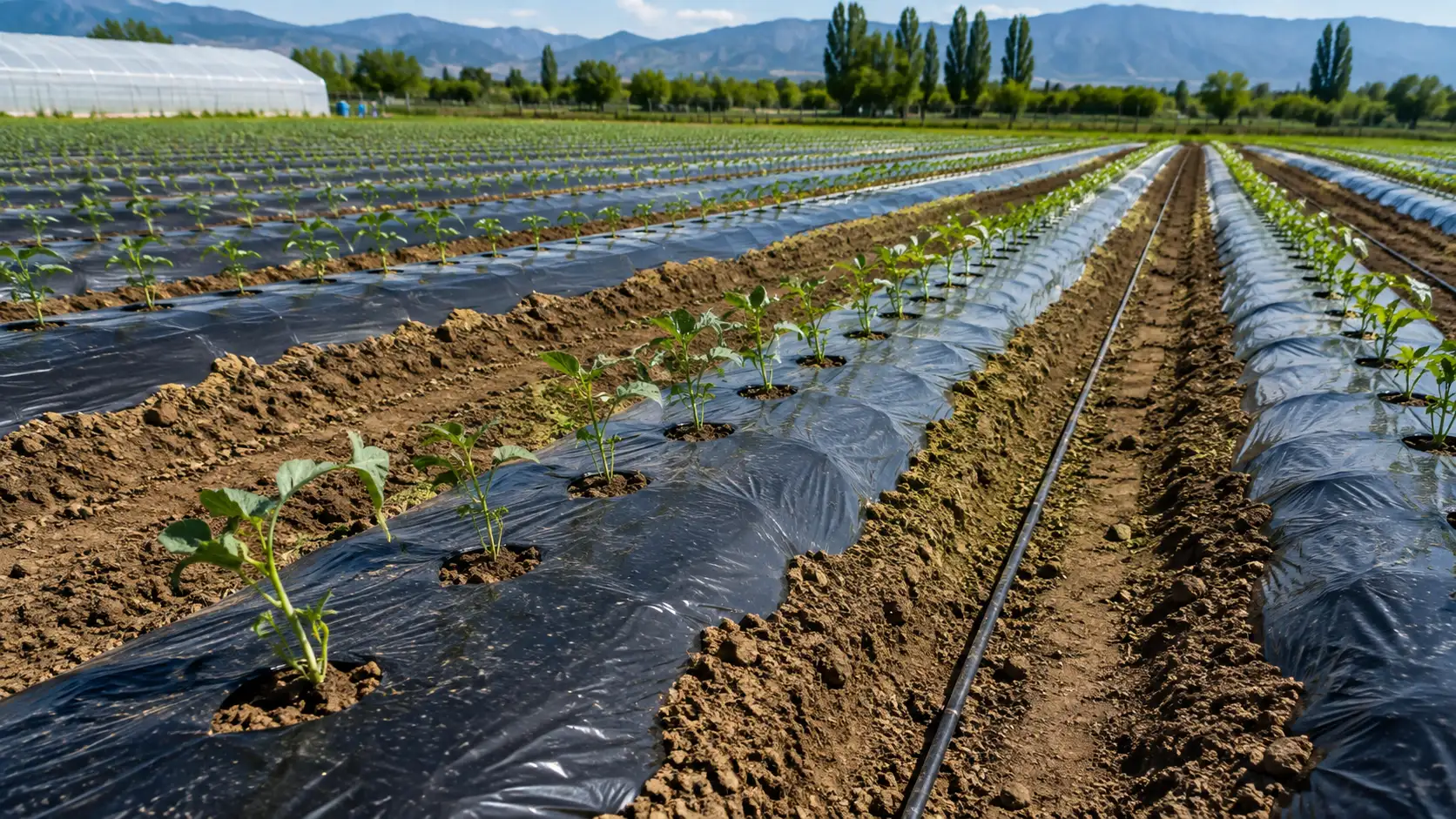
When selecting mulch, we don’t just consider the width or thickness of the plastic. We evaluate factors such as the growing season, whether the crop will be grown in an open field or a greenhouse, row spacing, weed pressure, and irrigation infrastructure, and use this comprehensive assessment to recommend the most suitable product.
What Is Mulch?
The questions “What is mulch?” or “What does mulch mean?” refer to the protective layer that covers the soil surface in agricultural production. Mulch can consist of organic materials such as straw, dry leaves, and tree bark, or plastic coverings manufactured specifically for agricultural use.
A mulch layer creates a physical barrier between the soil and the external environment. This barrier can help limit direct sunlight from reaching the soil surface, water loss through evaporation, and the growth of certain weeds.
The type of mulch used in agriculture should be selected according to the purpose of the application. Plastic mulch used in vegetable production and organic mulch applied around trees do not perform exactly the same functions in the same way.
What Is the Purpose of Mulching?
The answer to the question “What is mulch used for?” varies depending on the material used and production conditions. However, its primary purpose is to provide better control over conditions in the root zone. The benefits of mulching are particularly evident in areas such as water management, weed control, and reducing direct contact between produce and the soil.
Proper mulching can provide the following benefits:
- Helps reduce evaporation from the soil surface.
- Supports more consistent soil moisture retention.
- Limits the growth of certain weeds by blocking sunlight.
- May reduce direct contact between fruit and the soil.
- May help prevent mud formation on the soil surface.
- Can contribute to the more controlled use of drip irrigation water in the root zone.
- Helps regulate soil temperature according to the properties of the covering material used.
- Can help keep maintenance and harvesting areas in the field more organized.
However, mulching in agriculture alone does not guarantee high yields. Practices such as choosing the wrong covering material, overwatering, or inadequate drainage beneath the mulch can reduce the expected benefits.
How Do You Mulch?
The first step in answering the question “How is mulching done?” is not simply laying plastic mulch directly over the soil. The field should first be prepared, the row layout for the crop should be determined, and if drip irrigation will be used, the irrigation lines must be correctly positioned before laying the mulch.
The application is generally carried out in the following order.
1. Prepare the Soil for Planting
For a successful mulching application, the soil should first be prepared according to the requirements of the crop. Large stones, plant residues, and hard objects that could damage the mulch should be removed as thoroughly as possible.
If raised beds or planting rows will be formed, their height and width should be determined according to the planting system. The surface should not be excessively uneven so that the plastic mulch can fit properly.
The soil’s drainage capacity should also be assessed before application. Water accumulation beneath the mulch can create undesirable conditions in the root zone.
2. Install the Drip Irrigation Line
If irrigation will be carried out beneath the mulch, the drip irrigation pipes should be positioned according to the planting rows. The pipe location, emitter spacing, and water outlet points should be suitable for the root structure of the crop.
Mirza Tarım’s Drip Irrigation Pipes can be evaluated according to different row layouts and irrigation requirements in greenhouse and open-field production.
Because accessing the pipes becomes more difficult after the plastic mulch has been laid, line connections, water flow, and possible leaks should be tested before the covering is closed.
3. Select the Appropriate Type of Mulch
When choosing among different types of mulch, the crop being cultivated and the purpose of the application are the determining factors. Organic materials and plastic mulch may not produce the same results under identical growing conditions.
The following factors should be considered when making a selection:
- Crop to be cultivated
- Growing season
- Open-field or greenhouse use
- Soil temperature
- Weed density
- Irrigation method
- Planting spacing
- Duration of use
- Width and thickness of the covering
Agricultural plastic coverings may be preferred in commercial vegetable and strawberry cultivation because they can be applied quickly and provide consistent coverage over planting rows.
4. Lay the Mulch Over the Soil
The mulch covering should be placed evenly and carefully over the row or raised bed. Large air pockets should not be left beneath the covering, and it should maintain consistent contact with the surface wherever possible.
If the covering is stretched too tightly, the risk of tearing may increase due to temperature changes or field operations. If it is left too loose, wind may get underneath the covering.
Depending on the production method, the edges should be secured by burying them in the soil or using an appropriate fastening method.
5. Prepare the Planting Holes
If pre-punched plastic mulch is not being used, the planting points should be determined according to the row spacing and distance between plants. Making the holes larger than necessary may reduce the effectiveness of the mulch in controlling weeds.
Instead of opening planting holes randomly, they should be prepared at equal intervals in accordance with the production plan. This stage should be carried out carefully, especially for crops such as strawberries, where row arrangement affects plant development and harvesting.
6. Inspect the Covering Throughout the Season
The mulching process should not be considered complete once the covering has been laid. Tears, leaks in the irrigation line, weeds emerging through planting holes, and water accumulation beneath the covering should be monitored throughout the growing season.
When the mulch is damaged, even a small opening may grow over time. Leaks in the irrigation line may also not be immediately visible from the surface because the pipes are located beneath the covering.
What Are the Different Types of Mulch?
Types of mulch can generally be classified as organic and inorganic mulch. Different materials are preferred depending on the production purpose, crop type, and intended duration of use.
What Is Organic Mulch?
Organic mulch is created by spreading straw, dry leaves, tree bark, grass clippings, or other suitable natural materials over the soil surface.
These materials can decompose over time and contribute to the soil’s organic matter content. However, in commercial row-crop production, standardizing the application thickness and maintaining consistent weed control may not always be easy.
Care should also be taken to ensure that the organic material does not carry diseases, pests, or weed seeds.
What Is Plastic Mulch?
Plastic mulch refers to coverings manufactured with specific thickness, width, and color properties for agricultural production. It is commonly used as plastic mulch film, particularly in vegetable and strawberry cultivation.
Mirza Tarım’s Greenhouse and Ground Cover Plastics product range includes vegetable mulch film, strawberry mulch film, and various agricultural covering options.
When selecting plastic mulch, factors other than color—including crop type, growing period, width, thickness, and planting method—should also be considered.
Are Mulch Cover and Mulch Plastic the Same Thing?
Mulch covering is a broader term. Organic or synthetic materials used to cover the soil surface can be included within this definition. Plastic mulch film, on the other hand, refers specifically to plastic mulch coverings used in agricultural production.
This distinction is important when selecting a product. Spreading straw around trees in a garden is a form of mulching, just as covering vegetable rows with specialized agricultural plastic is.
In commercial production, plastic mulch films provide a more controlled application, particularly in fields with clearly defined planting rows.
What Is Mulch Film?
Plastic mulch film is an agricultural plastic covering used to cover the soil surface, suppress weed growth, help retain soil moisture, and provide more controlled conditions in the plant’s root zone.
On Google, it may also be searched using terms such as mulching film, plastic mulch, or agricultural mulch film. Although their general purposes may be similar, the products do not necessarily have the same technical specifications.
The following features should be considered when choosing the right plastic mulch film:
- Film width
- Thickness
- Color
- Whether it is perforated or non-perforated
- Planting spacing
- Intended duration of use
- Crop to be cultivated
- Open-field or greenhouse use
Choosing a product based solely on price may result in the use of a covering that is unsuitable for the production area.
What Is Vegetable Mulch Used For?
Vegetable mulch film is one of the agricultural plastic products used to cover the soil surface when cultivating tomatoes, peppers, eggplants, cucumbers, and various row-grown vegetables.
Vegetable plastic mulch film helps reduce weed growth by limiting the amount of sunlight that reaches the soil surface. Keeping the soil covered can also help control water loss from the surface.
When using mulch in vegetable production, planting spacing, row width, and the position of the irrigation line should be planned together. Placing the drip irrigation line at the correct position beneath the covering is particularly important for balanced irrigation of the root zone.
Why Is Strawberry Nylon Used?
Strawberry mulch film is a specialized type of plastic mulch film for strawberries used to cover the soil along strawberry rows and reduce direct contact between the fruit and the soil surface.
Direct contact with the soil may cause strawberries to become dirty and can lead to undesirable quality issues under moist conditions. Mulch film creates a physical barrier between the fruit and the soil, helping provide a cleaner surface for harvesting.
Strawberry mulching film can also help control weed growth along planting rows and support the more controlled use of drip irrigation water within the root zone.
For farms with a predetermined planting layout, pre-punched mulch films can speed up the application process. However, the spacing between the holes must be compatible with the strawberry variety and planting plan.
What Is Black Mulch Nylon Used For?
Black plastic mulch film is one of the preferred plastic mulch options for weed control because it significantly limits the amount of light reaching the soil surface.
Light can be an important factor in the germination and growth of weed seeds. By reducing light transmission, the black surface helps suppress many weeds that might otherwise grow beneath the mulch.
However, the color of plastic mulch film should not be evaluated solely in terms of weed control. Because color can also affect the absorption or reflection of solar energy, the region’s temperature conditions and the growing season should be taken into consideration.
Where Is Perforated Mulch Nylon Used?
Perforated plastic mulch film is a type of mulch film with planting holes prepared during production. It can help ensure more consistent seedling placement, particularly in operations with standardized row and plant spacing.
When selecting a perforation pattern, the following factors should be evaluated together:
- Number of rows
- Spacing between plants
- Bed width
- Crop to be cultivated
- Position of the irrigation line
Prices for perforated plastic mulch film are not determined solely by the number of holes. The product’s width, thickness, roll length, raw material properties, and manufacturing standards may also affect the price.
Therefore, instead of comparing only the price per metre or kilogram, it is more accurate to consider the total cost of using a product that is genuinely suitable for the production area.
What Factors Determine the Price of Mulch Film?
Plastic mulch film prices may vary depending on the product’s technical specifications and the quantity purchased. Two mulch films sold under the same name should not be expected to have the same price if their thickness, width, or intended use differs.
The main factors that can affect the price include:
- Product thickness
- Film width
- Roll length
- Perforated or non-perforated production
- Raw material used
- Color and manufacturing specifications
- Order quantity
- Changes in production and raw material costs
When purchasing plastic mulch film, rather than comparing only the lowest unit price, you should consider how many rows the product will cover and whether it will meet your requirements throughout the growing season.
For current product options, you can explore our Greenhouse and Ground Cover Plastics range.
What Factors Determine the Price of Mulch Film?
Mulching and drip irrigation are two agricultural practices that complement each other when properly planned. While the mulch film covers the soil surface, the drip line delivers water beneath the covering directly to the plant’s root zone.
This system generally involves the following steps:
- Prepare the soil and planting rows.
- Place the drip irrigation pipes along the rows.
- Run the system to check the connections and emitters.
- Lay the plastic mulch film over the irrigation line.
- Prepare the planting holes.
- Plant the seedlings in alignment with the emitter positions.
The advantage of this sequence is that water is directed to the root zone where it is needed instead of irrigating the entire soil surface.
Because the position of the irrigation line will no longer be visible after the mulch has been laid, the irrigation system should be tested beforehand. A bent or crushed pipe, or a leak at a connection point, may be difficult to repair during the growing season.
What Are the Benefits of Mulching?
The benefits of properly applied mulching are not limited to reducing weeds. Mulching can also help manage the physical conditions of the growing area more effectively.
The main advantages include:
- It can help reduce water loss from the soil surface.
- Mulch covering can suppress weed growth.
- It can reduce direct contact between fruit and the soil.
- It can help keep the soil along planting rows cleaner.
- When combined with drip irrigation, it can support effective root-zone irrigation.
- It can help regulate soil temperature depending on the type of mulch used.
- It can reduce the need for hoeing and manual weed removal.
- It can help keep planting rows more organized.
The extent of these benefits varies depending on the climate, soil, crop, type of mulch, and irrigation management.
Are There Any Disadvantages to Mulching?
Mulching can create certain operational and application-related problems when it is not properly planned. Particularly in areas where plastic mulch is used, end-of-season removal and waste management should be considered from the installation stage onward.
The main points to consider include:
- Choosing the wrong color or product may affect soil temperature in an undesirable way.
- Irrigation leaks beneath the covering may be difficult to detect.
- Inadequate drainage may cause water accumulation.
- Thin or unsuitable material may become damaged during installation.
- Plastic mulch must be completely removed from the field after use.
- Small pieces of torn plastic should not be left in the soil.
Therefore, when using plastic mulch, both installation and the end-of-season removal and recycling process should be planned.
What Should You Consider When Choosing Mulch Film for Warm Climates?
In regions with intense sunlight, such as Antalya and the Mediterranean climate zone, soil temperature should be given particular consideration when selecting plastic mulch film. The color of the covering and its ability to absorb or reflect light can affect temperature conditions beneath the film.
While excessive heating of the root zone is undesirable during summer production, a certain degree of soil warming can be beneficial during cooler periods. Therefore, the same mulch covering is not automatically the right choice for every crop or every season.
Particularly in open-field vegetable and strawberry production in Antalya, the following information should be evaluated before selecting a product:
- Planting date
- Harvest period
- Crop variety
- Level of sun exposure in the field
- Irrigation frequency
- Soil type
- Row layout
- Intended duration of use
We recommend providing this information as early as possible when selecting a product.
Common Mistakes Made When Mulching
Important considerations when mulching include the application technique as well as material selection. Incorrectly laying the film or covering the irrigation line without testing it can cause problems during the growing season.
Laying the Covering Without Preparing the Soil
When the mulch covering is laid on stony or highly uneven ground, pressure points underneath may puncture or tear the film.
Failing to Test the Drip Irrigation Line
The irrigation pipes should be operated before laying the plastic mulch film. A blocked emitter or leaking connection becomes more difficult to detect after the covering has been laid.
Using the Wrong Width
The mulching film should adequately cover the row or raised bed. A covering that is too narrow may leave the edges exposed, while an excessively wide product may result in unnecessary material use.
Stretching the Mulch Too Tightly
When plastic mulch is installed too tightly, it may tear more easily due to temperature changes, wind, or field operations.
Making the Planting Holes Too Large
With perforated plastic mulch film or planting holes opened after installation, excessively large openings may allow light to reach the soil and weeds to grow through these gaps.
Leaving Plastic Fragments in the Field at the End of the Season
Used plastic mulch film should be carefully removed at the end of the season, ensuring that no small plastic fragments remain in the field. Agricultural plastics should be directed to appropriate collection and recycling channels.
What Should You Consider When Choosing Plastic Mulch Film?
When selecting the right plastic mulch film, simply knowing that the product is “black” or “perforated” is not sufficient. Its technical specifications should be matched with the production plan.
We recommend answering the following questions before purchasing:
- Which crop will be cultivated?
- Will production take place in an open field or a greenhouse?
- In which month will planting take place?
- What is the width of the row or raised bed?
- What is the planting distance between plants?
- Will drip irrigation be used?
- How many growing seasons will the mulch be used for?
- What is the weed density in the region?
- What are the typical soil and air temperature ranges?
- Is perforated or non-perforated film required?
This information makes it easier to determine the appropriate product width, structure, and application method.
What Is the Difference Between Mulch Film and Greenhouse Film?
Plastic mulch film is used on the soil surface, while greenhouse film is used to cover the greenhouse structure and separate the growing area from the external environment.
Although both products belong to the agricultural plastics category, their intended uses and required technical properties differ. Light transmission, UV resistance, and greenhouse climate management are key considerations for greenhouse coverings, while covering the soil surface, suppressing weeds, and managing moisture and temperature in the root zone are more important for mulch products.
Therefore, these products should not be used interchangeably.
Work with Mirza Tarım to Find the Right Mulch Product for Your Farming Needs
At Mirza Tarım, we help growers select agricultural plastics for greenhouse and open-field production. When selecting plastic mulch film, we evaluate the crop, planting season, row dimensions, and irrigation infrastructure together.
Our product range includes vegetable mulch film, strawberry mulch film, and greenhouse and ground cover plastics designed for various agricultural applications.
Share the dimensions of your growing area, the crop you cultivate, and your planting plan with us to receive product information and a price quotation for a mulch film suited to your needs.
Frequently Asked Questions
How many microns thick should the plastic mulch be?
There is no single standard answer to the question of how many microns mulch film should be. The thickness should be determined based on the crop being grown, the duration of use, the laying method, and whether the film is intended for single-season use or longer-term use. While thinner films may be preferred for seasonal applications, products with high physical durability may be required under more demanding field conditions.
Should we use black plastic mulch or mulch in a different color?
Black plastic mulch is preferred, particularly in applications where the goal is to reduce weed pressure, because it limits the amount of light reaching the soil. However, the choice of color should not be based solely on weed control; the growing season, regional temperature, and the desired temperature in the root zone should also be taken into account.
Is the drip tube laid under the mulch film?
Yes. Drip irrigation tubing is typically placed under the mulch film, in a position suitable for the plant’s root zone. In strawberry production, practices where drip irrigation tubing is laid along the rows before the mulch film is applied are also included in official production guidelines.
The system must be tested before the plastic mulch is laid; it is essential to verify that the emitters are dispensing water, the tubing is not kinked, and there are no leaks at the connections.
Should you choose perforated mulch film or non-perforated mulch film?
If the planting row and the spacing between plants are predetermined, using perforated mulch film can speed up the process. However, the pre-cut holes must match the planting spacing of the crop being used.
In cases where the grower plans to use different row or planting distances, a non-perforated product can be chosen, and planting holes can be cut later according to the field layout. Therefore, the row width and seedling spacing must be known before making a selection.
Can regular plastic mulch be used for strawberries?
Not all mulch films should be treated the same way for strawberry cultivation. When growing strawberries, row width, seedling spacing, the location of the drip irrigation line, and the need to minimize fruit contact with the soil must all be taken into account.
For this reason, it is more appropriate to choose a strawberry mulch film with dimensions and a planting pattern suitable for strawberry production.
Does plastic mulch completely prevent weeds?
Plastic mulch can significantly suppress the growth of many weeds by limiting the amount of light reaching the soil surface. However, weeds may continue to emerge through planting holes, exposed edges, or torn sections.
It is necessary to remove established weeds before laying the mulch and to monitor for gaps in the mulch cover throughout the season.
