


Why Does Greenhouse Plastic Tear? 7 Common Causes and Solutions
Why does greenhouse plastic tear? The answer is not always related to the quality of the covering material. Improper installation, friction caused by wind, UV exposure, agricultural chemicals, and unsuitable fastening components can all damage greenhouse film. Small tears that go unnoticed or are left unrepaired may gradually develop into larger areas of damage.
At Mirza Tarım, we aim to help growers use their greenhouse coverings safely and effectively for as long as possible. Understanding the causes of damage is essential, but selecting the right greenhouse plastic for the structure and local growing conditions is equally important. In this guide, we explain the seven most common causes of greenhouse plastic tearing, practical repair methods, and preventive measures that can help reduce the risk of damage.
Contents
Toggle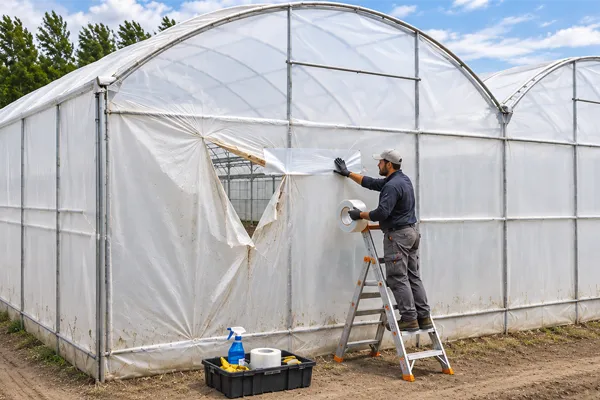
7 Common Causes of Greenhouse Plastic Tearing
Greenhouse plastic tearing can occur suddenly due to external forces or develop gradually through mechanical wear, chemical exposure, and material aging. Identifying the underlying cause is essential to prevent the same problem from occurring again.
1. Improper Tension and Installation Mistakes
Greenhouse plastic installation mistakes can negatively affect the performance and durability of the covering material. Stretching the film too tightly may concentrate mechanical stress around fastening points, increasing the risk of tearing.
Insufficient tension can also cause problems. When the covering is too loose, wind may cause it to flap repeatedly against the greenhouse frame, leading to abrasion and gradual damage.
At Mirza Tarım, we recommend following the film manufacturer’s installation guidelines rather than focusing only on achieving a visually smooth surface. Proper tension and secure fastening are essential for maintaining the integrity of the covering.
2. Unsuitable Greenhouse Clips and Fasteners
The fastening components used to secure greenhouse film to its supporting structure play an important role in protecting the material.
Clips that are incorrectly sized, damaged, or have rough surfaces may create concentrated pressure or friction against the plastic film.
Small tears around fastening points can gradually become larger as the covering moves under wind loads. For this reason, we recommend selecting greenhouse clips and fasteners that are compatible with the frame dimensions and fastening system.
You can explore the different fastening solutions available in our greenhouse clips and accessories category.
3. Wind Damage and Friction Against the Greenhouse Frame
Wind creates changing pressure and suction forces on greenhouse coverings. If the fastening system does not adequately secure the film, repeated movement can lead to friction and wear.
Metal joints, exposed connections, protruding fasteners, and sharp structural edges may be particularly problematic.
Over time, greenhouse film abrasion can weaken the material and create areas where tearing is more likely to occur.
We recommend inspecting the supporting structure before installing a new covering, smoothing rough surfaces, and using suitable protective materials wherever necessary.
4. UV Exposure and Plastic Film Degradation
Greenhouse coverings are continuously exposed to sunlight throughout their service life. Ultraviolet radiation can gradually degrade certain plastic materials, reducing flexibility and mechanical strength.
Why does greenhouse plastic become brittle or crack? One possible cause is UV-related aging. Signs of deterioration may include hardening, reduced flexibility, cracking, or tearing under relatively low mechanical stress.
UV stabilizers help slow this degradation process. However, UV resistance varies between products, and no additive can protect plastic indefinitely from all environmental conditions.
The University of Connecticut also discusses the effects of sunlight and abrasion on polyethylene greenhouse coverings in its technical guide to greenhouse plastic films.
5. The Effects of Agricultural Chemicals on Greenhouse Film
Certain agricultural chemicals may accelerate the deterioration of plastic greenhouse coverings.
Exposure to some sulfur- or chlorine-containing substances, depending on the product formulation and application conditions, may negatively affect the durability of particular greenhouse films.
The chemical resistance of greenhouse plastic depends on several factors, including the polymer structure, UV stabilization system, additives, and exposure conditions.
The European Commission’s GREENAVOID research project examines how agricultural chemicals and UV exposure can contribute to the degradation of greenhouse covering materials.
At Mirza Tarım, we recommend considering the agricultural treatments used inside the greenhouse when selecting a covering. Product-specific technical documentation is more reliable than general or unverified claims about chemical resistance.
6. Sharp Objects and Mechanical Damage
Greenhouse cover tears may also result from direct physical contact during installation, maintenance, or daily agricultural operations.
Tools, sharp structural components, exposed metal edges, branches, and certain severe weather events may puncture or cut the covering.
Small holes may initially go unnoticed. However, continued movement or tension can cause these openings to expand.
We recommend keeping sharp tools away from greenhouse coverings and inspecting the film regularly, especially around areas where equipment or structural components may come into contact with the material.
7. The Greenhouse Film Reaching the End of Its Service Life
Every greenhouse covering has a service life that depends on its material properties and conditions of use.
Over time, exposure to sunlight, temperature fluctuations, mechanical stress, and other environmental factors may cause the material to deteriorate.
As greenhouse plastic approaches the end of its service life, it may lose flexibility, become brittle, and tear more easily.
However, the remaining service life of a covering cannot be determined accurately from appearance alone.
At Mirza Tarım, we recommend evaluating the film’s technical specifications, physical condition, and actual operating environment before deciding whether replacement is necessary.
How to Repair Torn Greenhouse Plastic
Greenhouse plastic repair may be possible depending on the size of the damage and the overall condition of the covering.
Small tears in film that remains structurally sound can sometimes be repaired using suitable materials. However, if the covering has become brittle or shows widespread deterioration, repairing a single damaged area may not provide a lasting solution.
For a small, accessible tear, we recommend the following steps:
Inspect the damaged area. Determine the length of the tear, assess the condition of the surrounding film, and identify the cause of the damage.
Clean the surface. Remove dust, dirt, mud, and other contaminants that could interfere with adhesion.
Allow the area to dry. Prepare a clean, dry application surface according to the repair tape manufacturer’s instructions.
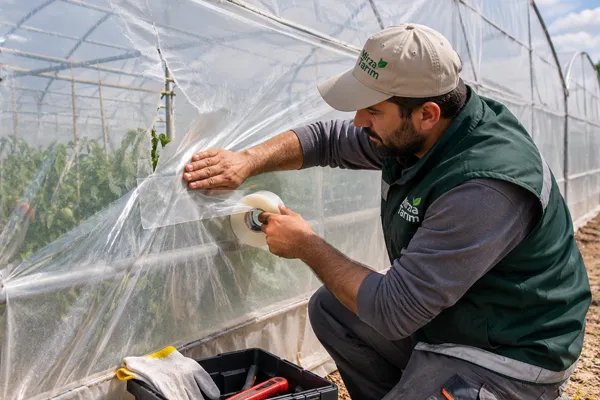
Apply suitable repair tape. Use tape compatible with the greenhouse film and extend it sufficiently beyond the damaged area. If the product instructions permit, applying tape to both sides may provide additional reinforcement.
Inspect the repaired section. Check that the tape adheres properly and that the underlying cause, such as friction or contact with a sharp edge, has been addressed.
Repairs should not be carried out during strong winds or at heights where safe access cannot be provided.
For extensive tears, damaged structural components, or repairs requiring work at height, we recommend seeking professional assistance.
How to Use Greenhouse Plastic Repair Tape
Greenhouse plastic repair tape is designed to seal small holes and limited tears in plastic greenhouse coverings.
However, not every adhesive tape is suitable for agricultural applications.
When the film is exposed to prolonged sunlight, moisture, and temperature changes, the tape’s UV resistance and compatibility with the covering material become especially important.
Growers often ask: How do you repair torn greenhouse plastic with tape?
The most important consideration is selecting a repair material that is compatible with the film rather than applying an arbitrary adhesive.
Ordinary packaging tape may not provide adequate long-term resistance to outdoor conditions. Some adhesives and solvents may also be unsuitable for particular plastic films.
At Mirza Tarım, we understand the importance of choosing the correct repair material for the application.
You can explore our greenhouse plastic repair tapes to find suitable options for agricultural covering repairs.
Before applying any repair tape, we recommend reviewing the manufacturer’s instructions, including surface preparation, application temperature, and material compatibility.
When Should Greenhouse Plastic Be Replaced?
Not every tear means that the entire greenhouse covering must be replaced.
However, in some circumstances, repeated repairs may only provide a temporary solution.
When considering greenhouse plastic replacement, it is important to assess both the size of the damage and the general condition of the material.
| Condition of the covering | Recommended assessment |
|---|---|
| Small, isolated hole | Repair with suitable greenhouse tape may be possible. |
| Short tear in otherwise sound film | Repair may be suitable depending on the location and extent of damage. |
| Repeated tears in different areas | Inspect the overall strength and condition of the covering. |
| Widespread brittleness and loss of flexibility | Consider replacing the greenhouse film. |
| Extensive tearing or structural damage | Inspect the greenhouse frame and safety conditions before proceeding. |
At Mirza Tarım, we encourage growers to look beyond the immediately damaged area.
Considering the existing condition of the film, its intended service life, and the cost of repair can help determine whether repairing or replacing the covering is the more appropriate option.
How to Prevent Greenhouse Plastic from Tearing
How can greenhouse plastic be protected from tearing? The answer involves more than choosing a suitable film. Correct installation, appropriate fastening, and regular maintenance also play important roles.
To help reduce preventable damage, we recommend the following measures:
Inspect the greenhouse frame for sharp edges and rough surfaces before installing the covering.
Tension the film according to the manufacturer’s recommendations.
Use clips and fastening components compatible with the greenhouse structure.
Inspect fastening points and areas exposed to friction after strong winds.
Follow the greenhouse film manufacturer’s recommendations regarding chemical exposure.
Identify and address small punctures and tears before they become larger.
Select the film’s UV resistance and service-life classification according to the local climate and intended use.
These precautions cannot prevent every type of damage, but they can help reduce tears caused by avoidable installation and maintenance problems.
Frequently Asked Questions
Why does greenhouse plastic crack?
Greenhouse plastic may become brittle or crack due to UV-related aging, temperature exposure, chemical contact, and mechanical wear.
To identify the likely cause, it is important to consider the age of the covering, its environmental conditions, and where the damage has developed.
Can torn greenhouse plastic be repaired?
Yes, in certain circumstances. Small and limited tears may be repaired using tape compatible with the greenhouse film.
However, repairs may not provide a lasting solution when the covering has become extensively degraded or brittle.
Can regular packing tape be used to repair greenhouse plastic?
Ordinary packing tape may not be designed to withstand prolonged UV exposure, moisture, and temperature fluctuations.
For this reason, we recommend using repair tape intended for greenhouse applications and compatible with the covering material.
Does greenhouse plastic need to be replaced after wind damage?
Not necessarily. The decision depends on the extent of the damage, the general condition of the covering, and the greenhouse structure.
For extensive damage or recurring tears, replacing the covering may be more appropriate than repeated repairs.
Does UV-stabilized greenhouse plastic prevent tearing?
UV stabilization helps slow degradation caused by sunlight.
However, it cannot prevent all tears resulting from improper installation, sharp objects, excessive tension, or strong mechanical forces.
Is It Time to Replace Your Greenhouse Cover?
Understanding the causes of greenhouse film damage can help growers make better decisions about repair and replacement.
At Mirza Tarım, we support producers in selecting greenhouse coverings based on local climate conditions, greenhouse structure, and intended service life.
If you are considering replacing a damaged covering, explore our greenhouse plastic options and compare products according to their service life, thickness, and technical properties.
You can also share your greenhouse dimensions and operating requirements with our team. We will help you evaluate suitable products and provide information about available options and pricing.
