


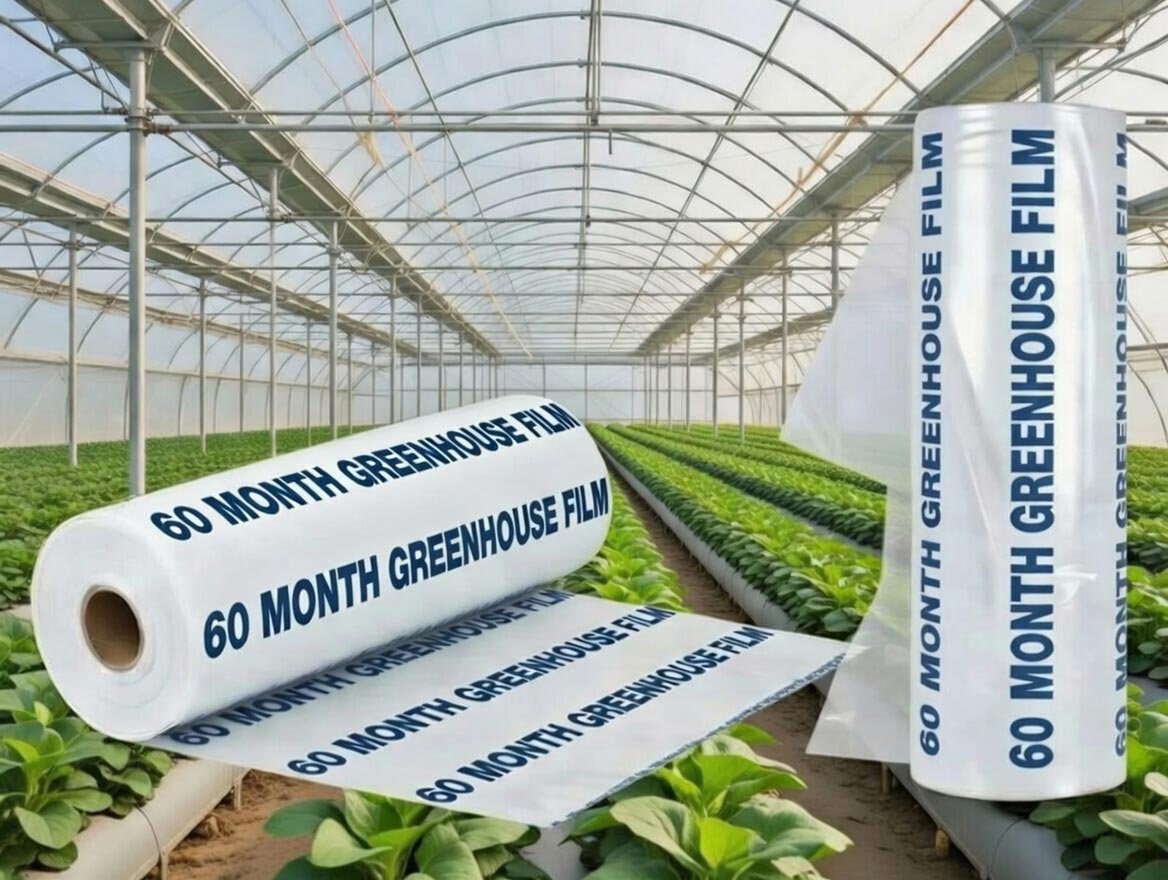
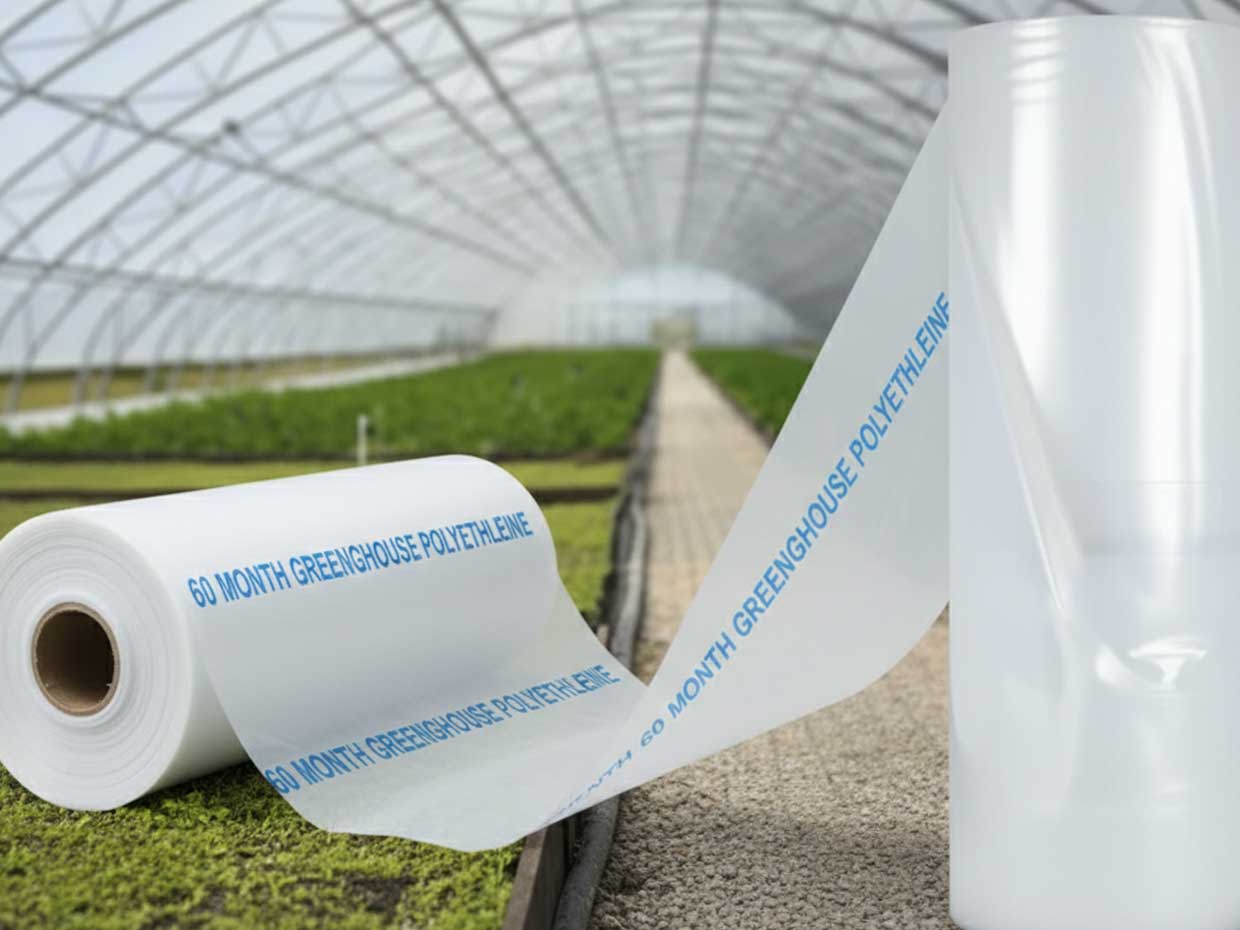
60-Month Greenhouse Plastic
60-month greenhouse film is a prominent product among durability-focused covering solutions preferred in long-lasting greenhouse systems. Compared to standard greenhouse covers, these films are produced with a thicker structure and special additives that ensure they maintain their performance for an extended period.
It offers a strong alternative, especially for producers aiming for sustainability in commercial greenhouses and large-scale agricultural production areas. Its long lifespan provides a significant advantage in production planning. By eliminating the need for frequent cover changes, this structure contributes to savings in time and labor costs.
In addition, it helps maintain more stable climate conditions inside the greenhouse, minimizing the impact of seasonal fluctuations on plants.
Don't let the weather ruin your hard work!
Product Information
Description
A 60-month-old greenhouse cover is considered not only a physical protective layer but also a strategic component that directly impacts production efficiency. Thanks to its UV resistance, it filters the harmful effects of sunlight while ensuring that plants receive the necessary amount of light evenly within the greenhouse. These types of covers are known for their ability to adapt to different climatic conditions.
60-Month Greenhouse Film: A Shield Against Harsh Climates
Strong winds, sudden temperature drops, hailstorms, and intense sunlight are among the biggest risk factors for greenhouse producers. Long-lasting greenhouse covering solutions developed to withstand such challenging natural conditions have become a fundamental building block of modern agriculture. Technological nylons offering durability for up to five years play a critical role in ensuring production continuity, especially in regions with harsh climatic conditions. At this point, economic sustainability becomes as important as durability. The prices of 60-month greenhouse nylon can vary depending on the thickness level, UV additive rate, layer structure, and light transmittance values of the product.
Thanks to its multi-layered production technique, this 60-month-old plastic greenhouse film offers high resistance not only to sunlight but also to mechanical stresses such as wind load, snow weight, and hail. Special raw materials that maintain flexibility minimize the risk of cracking and tearing. This ensures the film retains its shape and protective properties for many years.
High Micron 60-Month Greenhouse Tarpaulin
In greenhouse farming, materials that provide long-lasting and robust protection have become an indispensable part of modern production systems. Greenhouse tarpaulins with high micron thickness, in particular, offer a significant advantage for businesses operating in challenging climatic conditions. The thick structure increases mechanical strength and contributes to a more stable climate within the greenhouse. 60-month greenhouse films are coating solutions that stand out with their high micron values, specifically developed for long-term use.
Will 60-Month-Old Greenhouse Film Stretch Under Harsh Winter Conditions?
60-month greenhouse cover materials are generally produced using high-density polyethylene and multi-layer technology. This structure allows the nylon to be durable and stretched in a controlled manner. Controlled stretching is not actually a negative thing; on the contrary, it is an advantage that prevents cracking and sudden tears.
One of the most important features of long-lasting nylon is its resistance to low temperatures. Even in weather conditions approaching -20 degrees Celsius and below, high-quality products do not lose their controlled flexibility. 60-month greenhouse covers have a more advanced structure than standard products in terms of thickness and additives.
The Confidence of Industrial Agriculture: 60 Months of Greenhouse Films
The 60-month-old greenhouse tarpaulin doesn’t just serve as a cover in industrial agricultural facilities. It’s also considered a critical layer ensuring production safety. In modern greenhouses covering large areas, the long-term durability of the covering material extends maintenance intervals, facilitates operational planning, and prevents production losses due to sudden damage.
