


Government subsidies are not automatically applicable to every greenhouse; TKDK and Ministry grants are awarded based on project conditions, site suitability, and program criteria.
Turnkey greenhouse installation involves the complete execution of the entire process by a single professional team, starting from the design phase of the greenhouse investment and including infrastructure preparation, steel structure assembly, covering system, irrigation, and climate control integration. In this model, the investor delegates all responsibility to a single company instead of working with different suppliers separately.
This approach is particularly relevant for greenhouse installation, greenhouse installation costs, and turnkey greenhouse installation prices…
This approach provides clarity on issues such as greenhouse installation, greenhouse installation costs, and turnkey greenhouse installation prices. This is because costs, timeframes, and performance are planned from a single center. Considering that success in agricultural investments is directly related not only to the product grown but also to the infrastructure in which it is cultivated, the turnkey model minimizes risks.
Contents
Toggle| Title | Information |
|---|---|
| Scope | Project, infrastructure, installation, system integration |
| Average Duration | 10–30 days |
| Cost Range | 100 m² – 1 acre, depending on scale |
| Suitability | Vegetables, fruits, seedlings, hydroponics |
| Advantages | Single point of contact, low risk, high efficiency |
A successful turnkey greenhouse project begins with accurate calculations and is completed with integrated systems. Each stage directly impacts the next step.
The following data is analyzed during the site survey:
The region’s average wind load and snowfall
Soil structure and drainage conditions
Sun exposure time and orientation
Access to water sources
These analyses play a decisive role in calculating the cost of 1 acre of greenhouse and the cost of 1000 m² of greenhouse.
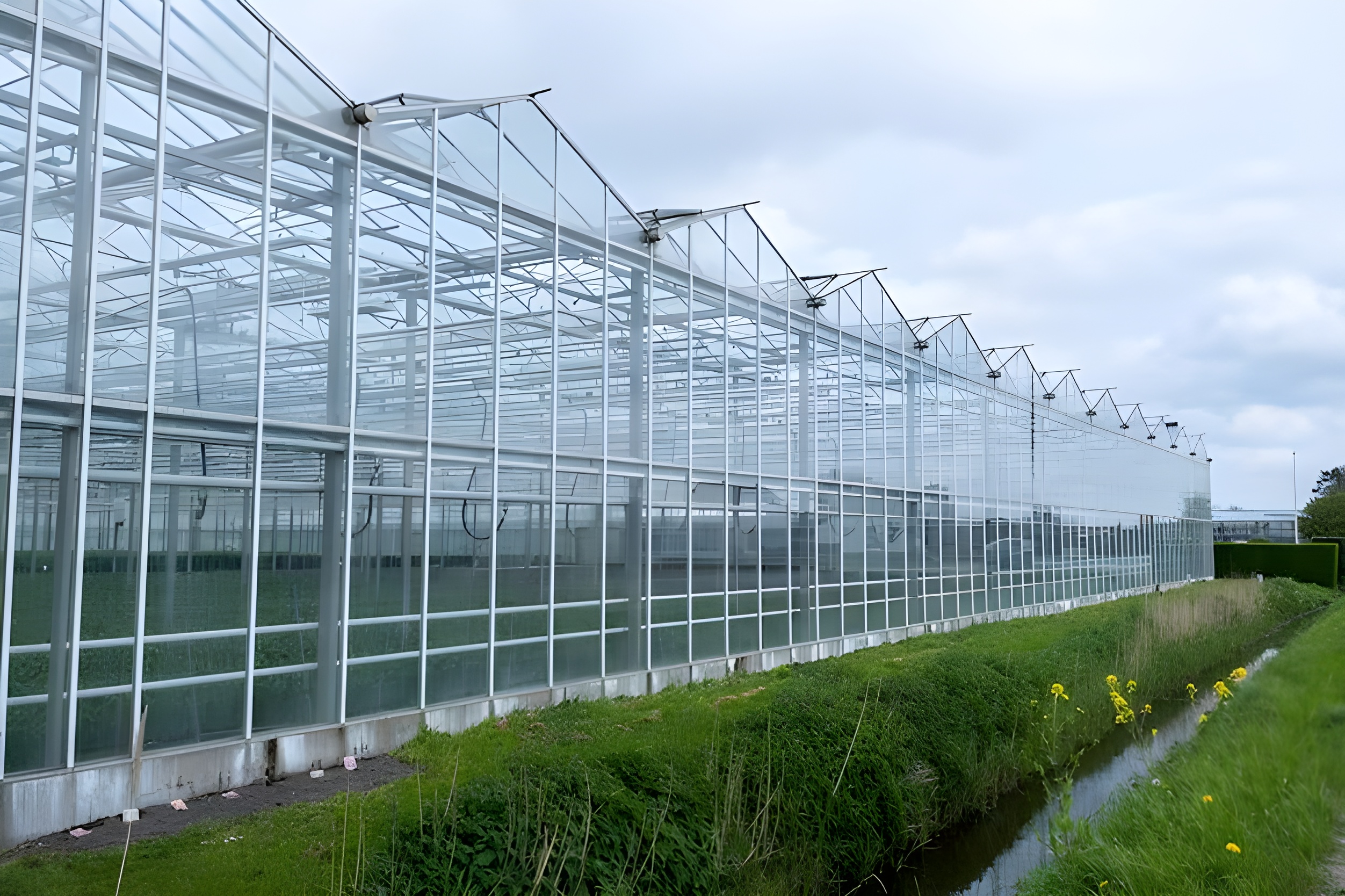
Not every product is suitable for every greenhouse type. Therefore, the greenhouse model is determined according to the plant to be grown during the design phase:
| Evening Types | Area of Use |
|---|---|
| Tunnel greenhouse | Low-budget investments |
| Gothic greenhouse | High internal volume, good ventilation |
| Modern greenhouse | Long-lasting and durable |
| Hydroponics | Soilless farming |
This stage forms the basis for research on hydroponic greenhouse costs and modern greenhouse systems.
The foundation of greenhouse durability is formed by galvanized steel construction. In professional projects:
Galvanized coating thickness
Profile ranges
Number of load-bearing columns
Details such as these are determined based on engineering calculations. For example, the answer to the question of how many tons of steel are required for one acre of greenhouse depends on the type of greenhouse, regional loads, and building height.
Cover selection directly affects the greenhouse climate:
UV-stabilized greenhouse films
Heat-retaining IR-featured covers
Glass greenhouse systems
Choosing the wrong cover leads to yield loss and high energy costs.
In turnkey greenhouse projects, the systems work together in an integrated manner:
Drip irrigation
Automatic ventilation
Heat curtains
Fogging systems
This integration reduces maintenance costs while improving product quality.
A successful turnkey greenhouse project begins with accurate calculations and is completed with integrated systems. Each stage directly impacts the next step.
Greenhouse area (100 m², 1000 m², 1 acre)
Greenhouse type (tunnel, gothic, modern arch)
Level of automation
Quality of materials used
Regional climate conditions
Therefore, it is not correct to give a single figure for the question of how much it costs to set up a greenhouse on one acre.
Antalya is the center of greenhouse investments in Turkey. The main reasons for this are:
Temperate climate
Long hours of sunshine
Logistics and supply advantage
For this reason, searches for Antalya greenhouse installation companies and Antalya greenhouse companies are quite high. Companies with regional experience offer solutions tailored to local climate conditions.
One of the frequently asked questions is whether a permit is required to build a greenhouse. Generally speaking:
Permits may be required in some regions for greenhouses built on agricultural land.
Permits may be requested for large-scale and permanent structures.
These processes must be checked before the project begins.
Another critical question: Is there government support for greenhouse construction?
TKDK grants
Support from the Ministry of Agriculture and Forestry
Regional incentive programs
These subsidies can significantly reduce greenhouse installation costs, especially for large-scale investments.
One of the topics investors are most curious about is profit.
Product type
Cultivation technique
Market conditions
Factors such as these directly affect earnings. For example:
How many tons of tomatoes can be produced from one acre of greenhouse?
How many tons of bell peppers can be harvested from one acre of greenhouse?
The clear answer to these questions depends on the technology used and the quality of maintenance.
Advantages of the turnkey model:
Single point of contact
Net budget
Time saving
Long-term yield
Greenhouse installations built in sections often result in high maintenance costs and low performance.
Turnkey greenhouse installation involves the complete execution of all greenhouse installation processes by a single company, including site survey, construction assembly, cover selection, automation, and climate control.
Greenhouse installation costs vary depending on the greenhouse area, the selected model (tunnel, gothic, modern arch), material quality, automation level, and regional climate conditions.
Government subsidies are not automatically applicable to every greenhouse; TKDK and Ministry grants are awarded based on project conditions, site suitability, and program criteria.

Adding {{itemName}} to cart
Added {{itemName}} to cart