


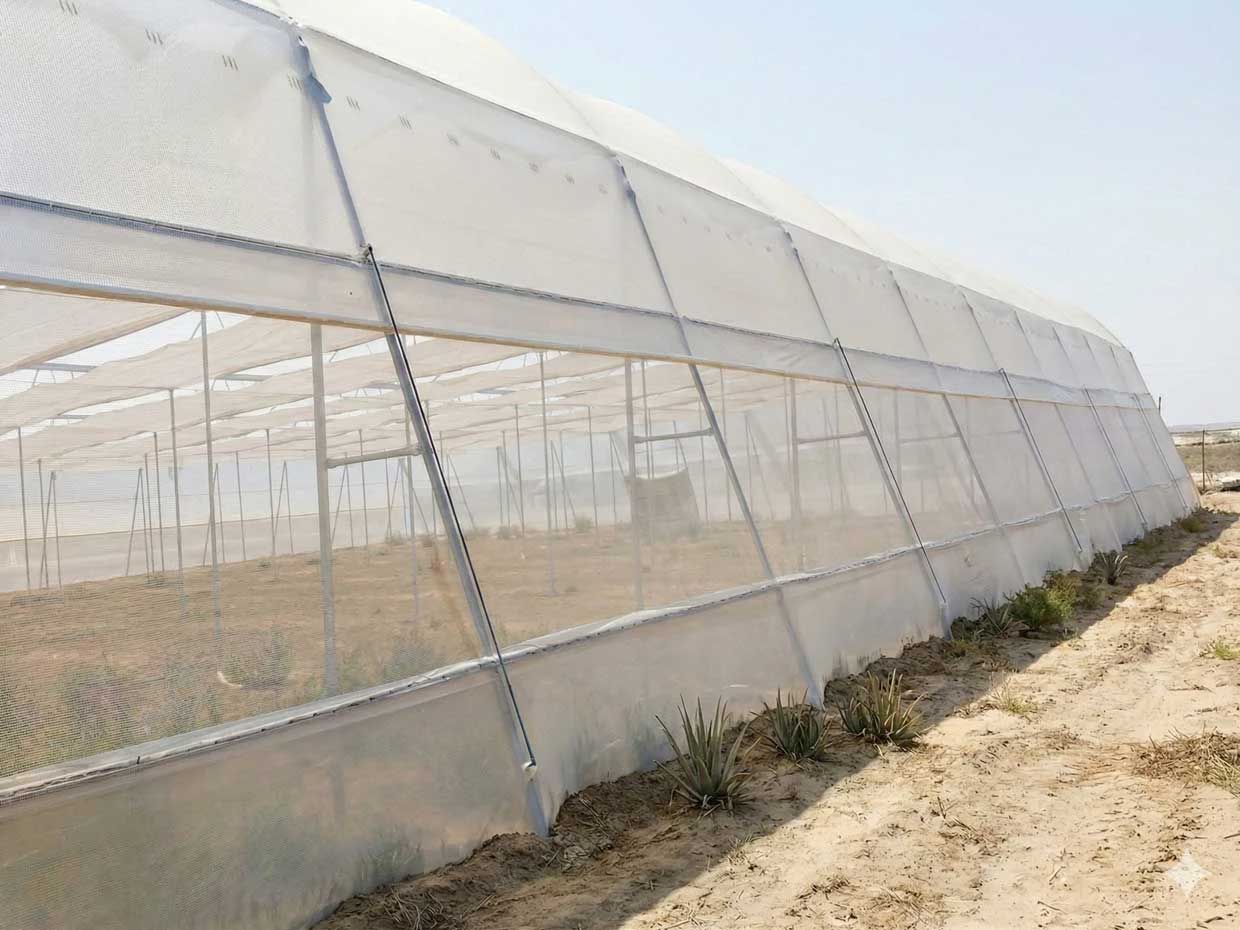
Insectnet Insect Screen 25-40-50 Mesh
Insect netting is a protective covering system with a special woven structure used in agricultural fields and greenhouses to protect plants from harmful insects.
This product, which helps reduce the use of chemical pesticides, especially in modern agricultural practices, supports the natural growth of plants while preventing yield loss. Thanks to its durable structure, it creates an effective barrier without blocking sunlight or airflow.
Don't let the weather ruin your hard work!
Product Information
Description
What is Insect Netting?
Mirza Tarım’s greenhouse insect netting varieties are specially manufactured to provide effective protection against pests such as whiteflies, thrips, aphids, and similar insects in greenhouses. Its fine mesh structure minimizes insect entry while helping to maintain the light and moisture balance required by plants. Thanks to its durable and wear-resistant material, it can be used safely in hobby greenhouses or professional agricultural settings.
Available in different sizes and densities, this product saves time thanks to its easy-to-apply structure. Quickly and securely available through Mirza Tarım, this product is an ideal choice for those seeking a practical and economical solution that supports sustainable agriculture.
How to Increase Product Yield Using Insect Netting?
One of the most important factors directly affecting agricultural productivity is the extent to which crops can be protected from pests. The use of insect netting stands out as an effective method that reduces crop loss and supports healthy production. By reducing dependence on chemical pesticides, it preserves the natural growth process of the plant, enabling higher-quality and more productive yields during harvest.
Insect netting creates a physical barrier in greenhouses and open fields, preventing harmful insects from reaching plants. This minimizes damage to leaves, flowers, and fruits. Since plants are not stressed, photosynthesis is more efficient, and root and stem development progresses in a balanced manner. This results in a noticeable increase in both the quantity and quality of the crop.
Insect netting varieties designed for different production needs play an important role in increasing yields. Fine-mesh models offer maximum protection against small pests, while wider-mesh options are ideal for areas with high air circulation. Choosing the right type of netting helps maintain the balance of light, air, and moisture that plants need. This balance directly affects product quality, especially in the production of sensitive vegetables and fruits.
The use of insect netting also reduces maintenance and production costs. As pest density decreases, the frequency of pesticide application decreases, saving labor and time. Loss rates decrease because a more controlled production environment is created, and a more predictable harvest process is achieved each season. The use of insect netting offers an economical and long-term solution that increases crop productivity within the framework of sustainable agriculture.
Why is Insect Netting Important in Agricultural Production?
The use of greenhouse insect netting prevents pests from reaching plants, thereby preventing potential losses in leaves, flowers, and fruits. This allows plants to experience less stress and ensures their growth process remains uninterrupted. At the same time, since it largely preserves air circulation and sunlight, the climate balance inside the greenhouse remains intact. This balance contributes to a higher quality and more homogeneous harvest, especially for sensitive crops.
Cost is also an important criterion for producers. Although insect net prices vary depending on the mesh structure, durability, and dimensions of the net, the increase in yield and cost savings it provides in the long term means it pays for itself in a short time. A durable and correctly selected greenhouse insect net means less loss, more profit, and a sustainable agricultural production process in every production season.
