


What Is Soilless Farming and How Is It Done?
What is soilless cultivation? Soilless cultivation refers to a production method in which plants receive the water and nutrients they need to grow without the use of conventional field soil. Plant roots develop either directly in a nutrient solution or in a suitable growing medium such as perlite, cocopeat, or rock wool. To establish an efficient system, the water supply, filtration, irrigation, drainage, fertilization, and climate control processes must be planned together.
Soilless cultivation is not simply about placing plants in a channel filled with water. Nutrients must be prepared in the correct proportions, the pH and electrical conductivity (EC) of the water must be monitored, the roots must receive sufficient oxygen, and excess nutrient solution must be drained or managed in a controlled manner.
Contents
Toggle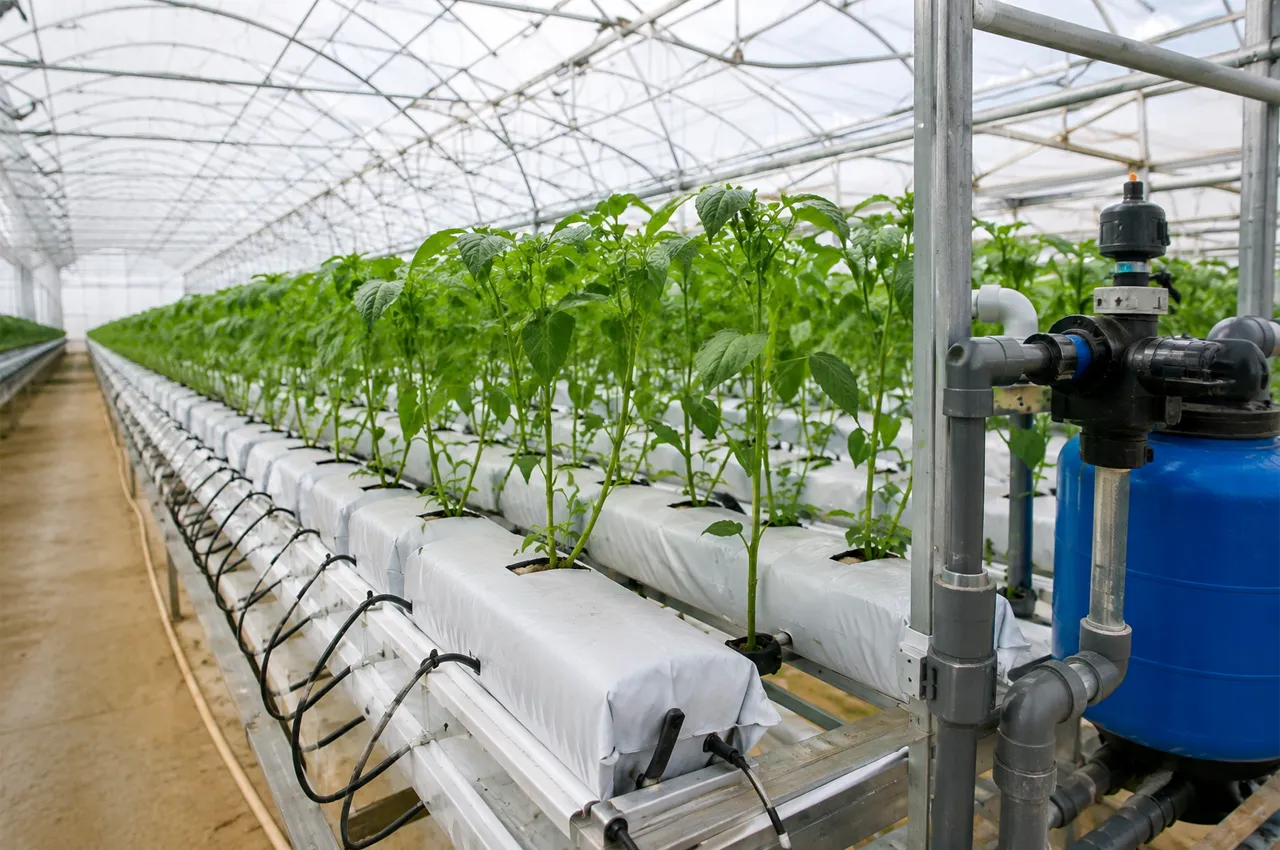
When evaluating a soilless cultivation infrastructure, we do not focus solely on the pipes or growing bags to be used. We consider the crop type, water quality, production period, greenhouse temperature, drainage capacity, and the operation’s technical monitoring capabilities as a whole.
What Is Soilless Cultivation?
Soilless cultivation is the general term for production methods in which plant roots develop in water, a nutrient solution, or an inert growing medium instead of field soil. In hydroponic production, the mineral nutrients required by plants are added to the irrigation water in controlled amounts.
In soil-based production, plants obtain water and nutrients from the soil. In soilless production, however, the balance of water, air, and nutrients in the root zone is managed through a system created and controlled by the grower.
This method can be applied in two main ways:
- Water culture systems in which the roots are in direct contact with the nutrient solution
- Substrate systems in which the roots develop in a medium such as perlite, cocopeat, or rock wool
Therefore, not every soilless cultivation system consists only of pipes filled with water. Substrate systems using growing bags and drip irrigation are also widely used in commercial greenhouses.
Are Hydroponics and Soilless Cultivation the Same?
Hydroponics is one of the best-known forms of soilless cultivation. However, soilless cultivation is a broader concept.
In hydroponic systems, plant nutrients are delivered to the roots through a water-based nutrient solution. The roots may be placed directly in the solution or supported by a medium such as perlite, cocopeat, vermiculite, or rock wool.
In aeroponic systems, the roots remain suspended in an enclosed and humid chamber. Water and nutrient solution are applied to the roots at intervals in the form of a fine mist or droplets.
For this reason, although the terms “hydroponics” and “soilless cultivation” are sometimes used with similar meanings, the operating principles of each system are not the same.
How Is Soilless Cultivation Done?
How is soilless cultivation done? For a successful application, the crop to be grown and the system to be used must first be determined. Then, the water is analyzed, the greenhouse and irrigation infrastructure are planned, the growing medium is prepared, and a nutrient solution suitable for the crop is formulated.
The installation process consists of the following basic stages.
1. The Crop to Be Grown Is Determined
The system should be designed according to the crop to be grown. Leafy vegetables with short production cycles, such as lettuce, do not have the same requirements as crops that remain in production for a long period, such as tomatoes and cucumbers.
Crop selection affects the following details:
- Plant spacing
- Root-zone volume
- The growing channel or bag to be used
- Number and flow rate of drippers
- Irrigation frequency
- Support and suspension system
- Harvest and maintenance areas
- Composition of the nutrient solution
Choosing a crop simply because it is popular in the market is not enough. The production period, climate control, labor requirements, and sales plan should also be evaluated before making an investment.
2. The Production Area Is Analyzed
The width, length, orientation, and usable height of the greenhouse or production area should be measured. Factors such as solar exposure, ventilation, shading, electrical infrastructure, and water source should be included in the project plan.
If there are elevation differences on the site, the drainage direction should also be determined. In soilless cultivation, uncontrolled accumulation of excess water can cause oxygen deficiency in the root zone and increase the risk of disease.
3. The Water Source Is Analyzed
In soilless cultivation, water is not only a source used to irrigate the plant. It is also the main component that carries plant nutrients to the root zone.
Before installation, the following water properties should be analyzed:
- pH value
- Electrical conductivity (EC)
- Alkalinity
- Salinity
- Bicarbonate level
- Sodium and chloride content
- Hardness and scaling risk
- Microbiological characteristics
- Hourly flow rate
- Available pressure
Water that appears clear is not necessarily suitable for soilless cultivation. High alkalinity can make pH control of the nutrient solution more difficult, while salinity can affect the plant’s ability to take up water and nutrients. Water alkalinity has a significant effect on the pH tendency of the nutrient solution.
4. The Soilless Cultivation System Is Selected
The appropriate system is selected according to the crop, the scale of the operation, and the available technical monitoring capacity. There is no single “best system” for every operation.
The following questions should be answered during system selection:
- Which crop will be grown?
- Will production be commercial or for hobby purposes?
- How much space is available in the greenhouse?
- Is there a backup system for power outages?
- Will the nutrient solution be recovered and reused?
- Can the system be monitored on a daily basis?
- What is the investment and operating budget?
- How will drainage water be managed?
5. The Greenhouse Infrastructure Is Prepared
A soilless cultivation system used in a greenhouse cannot be evaluated independently of the covering and climate-control systems. When temperature, relative humidity, light level, or ventilation changes, the plant’s water consumption also changes.
When selecting the greenhouse covering, light transmission, UV resistance, thermal properties, and the intended period of use should be considered. Mirza Tarım’s greenhouse film options can be evaluated for different greenhouse types and production conditions.
If a new greenhouse investment is being planned, the structure, covering, ventilation, irrigation, and drainage should not be handled separately but as parts of a single project. In this process, Mirza Tarım’s Turnkey Greenhouse Installation service can be used to plan the production infrastructure as an integrated system.
6. The Growing Medium Is Prepared
In substrate-based systems, a growing medium is used instead of soil to support the plant roots. Its water-holding capacity, air capacity, drainage characteristics, and physical durability should be considered.
Commonly used growing media include:
- Cocopeat
- Perlite
- Rock wool
- Vermiculite
- Expanded clay
- Peat-based mixes
- Pumice
The growing medium does not necessarily provide nutrients directly to the plant. Its main role is to support the roots, retain irrigation water for a certain period, and maintain sufficient air space around the root zone.
The same material may not be suitable for every crop or irrigation program. Fine-textured media with high water-holding capacity require different irrigation frequencies than coarse-textured media that drain quickly.
7. The Irrigation and Fertigation System Is Installed
In commercial substrate-based systems, the nutrient solution is usually delivered to plants through drip irrigation lines. The main pipe, filter, fertigation unit, distribution lines, and drippers should all be selected according to the required flow rate.
Drip Irrigation Pipes can be used to carry water and nutrient solution along crop rows. For main lines, Coiled Pipe options suitable for the project capacity can be evaluated.
Appropriate Fittings and Connection Parts should be used to connect lines, change direction, and control irrigation sections.
The following equipment may be required during installation:
- Water storage tank
- Clean-water and nutrient-solution tanks
- Pump
- Filtration unit
- Main irrigation pipe
- Distribution pipes
- Drippers
- Valves and fittings
- Fertilizer dosing unit
- pH and EC meters
- Timer or automation system
- Drainage collection line
- Recirculation and disinfection system
8. The Nutrient Solution Is Prepared
The macro- and micronutrients required by plants are added to the irrigation water in appropriate proportions. The formulation should be prepared according to the crop, growth stage, water analysis, and growing medium.
When preparing the nutrient solution, the fertilizer amount alone is not sufficient. The pH and EC values of the solution should also be measured.
- pH indicates the acidity or alkalinity of the solution.
- EC provides an indication of the total concentration of dissolved ions in the solution.
A high EC value does not necessarily mean that each nutrient element is present in the correct proportion. EC shows the total ionic concentration but does not explain the balance of individual elements. For this reason, fertilizer should not be added without control based solely on EC measurements.
Appropriate pH and EC targets vary according to the crop, growth stage, temperature, and system used. Measuring devices should be checked regularly with calibration solutions.
9. Seedlings Are Placed in the System
Healthy seedlings with strong root systems and no visible signs of disease should be preferred. The seedlings are placed in growing bags, channels, or other suitable positions within the system.
During planting, care should be taken not to damage the root zone, and the dripper should deliver water to the correct point. During the first days, the irrigation program should be applied carefully according to the seedling’s root volume.
10. An Irrigation Program Is Created
In soilless cultivation, irrigation frequency should not be fixed only according to the clock. The plant’s growth stage, greenhouse temperature, light level, water-holding capacity of the growing medium, and drainage volume should all be monitored together.
On hot and sunny days, plant water consumption may increase. Applying the same irrigation duration on cloudy and cool days may cause excessive water accumulation in the root zone.
The following data can be monitored when preparing an irrigation program:
- Daily amount of water applied
- Amount of drainage solution collected
- Input and drainage EC values
- Input and drainage pH values
- Greenhouse temperature and humidity
- Solar radiation or light level
- Plant growth stage
- Moisture level in the root zone
11. The System Is Monitored Regularly
In soilless production, even a small irrigation or dosing error can affect a large number of plants within a short time. For this reason, daily system monitoring is important.
The main points to be checked include:
- Check the water level in the storage tank.
- Measure the inlet and outlet pressure of the filter.
- Record the pH and EC values of the nutrient solution.
- Compare dripper flow rates.
- Check the lines for leaks or blockages.
- Inspect the amount and appearance of drainage water.
- Check roots for changes in color or odor.
- Look for signs of nutrient deficiency in the plants.
- Test pumps, valves, and automation equipment.
- Keep a backup power and emergency-response plan ready.
What Are the Main Soilless Cultivation Systems?
Soilless cultivation systems are divided into different groups according to the way water and nutrient solution are delivered to the roots.
Nutrient Film Technique (NFT)
In the Nutrient Film Technique, a thin layer of nutrient solution flows continuously or intermittently along the bottom of channels containing the plant roots. It is generally used for crops with relatively limited root systems, such as lettuce and certain aromatic herbs.
The slope of the channels and the flow rate of the solution must be adjusted correctly. A pump failure or blockage can cause the roots to dry out in a short period of time.
Deep Water Culture (DWC)
In deep water culture, plant roots remain in the nutrient solution. Oxygen is supplied to the solution using an air pump or another aeration method to prevent oxygen deficiency in the root zone.
This system can be used particularly for leafy vegetables. The temperature, oxygen level, pH, and EC of the nutrient solution should be monitored regularly. Proper management of these measurements is important for system performance.
Substrate Culture
In substrate culture, plants are grown in a medium such as cocopeat, perlite, or rock wool. Nutrient solution is delivered to the root zone through drippers.
This system can be used for commercial greenhouse crops such as tomatoes, peppers, cucumbers, and strawberries. The water-holding and drainage characteristics of the growing medium directly affect the irrigation program.
Aeroponic System
In an aeroponic system, the roots remain suspended in an enclosed chamber, and nutrient solution is applied to them as a mist or fine droplets. Root access to oxygen can be high, but clogged spray equipment or pump failures require rapid intervention.
Open and Closed Systems
In open systems, excess nutrient solution that drains from the root zone is not reused. Drainage is removed from the production area in a controlled manner.
In closed systems, the drainage solution is collected, analyzed, treated as necessary, and may be returned to the system. This approach can support more controlled use of resources, but it requires more advanced monitoring in terms of disinfection, ion balance, and disease transmission.
Which Crops Can Be Grown with Soilless Cultivation?
Many vegetables, fruits, herbs, and ornamental crops can be grown using soilless methods when the appropriate system is established.
Common examples include:
- Tomatoes
- Peppers
- Cucumbers
- Strawberries
- Lettuce
- Basil
- Arugula
- Mint
- Parsley
- Certain cut flowers
- Seedlings and young plants
Leafy crops and fruiting crops have different root-zone volumes, support requirements, and nutrient programs. Therefore, the fact that a crop is “suitable for soilless cultivation” does not mean that every crop can be grown in the same system.
What Are the Advantages of Soilless Cultivation?
A properly installed and regularly monitored soilless cultivation system allows irrigation and plant nutrition processes to be managed in a measurable and controlled way.
The main advantages include:
- Water and nutrients can be delivered directly to the root zone.
- Irrigation programs can be adjusted according to the plant’s growth stage.
- Soil-borne weed problems can be reduced.
- Drainage problems caused by soil structure can be limited.
- Root-zone pH and EC values can be monitored.
- Fertilizer applications can be managed in a controlled manner.
- The production area can be planned more efficiently.
- Drainage solution can be recovered in suitable systems.
- The need for soil preparation and issues related to soil fatigue can be reduced.
- Production can become more measurable when integrated with greenhouse automation.
These advantages do not occur automatically. An incorrect nutrient recipe, insufficient filtration, or irregular irrigation can reduce system performance.
What Are the Disadvantages of Soilless Cultivation?
An investment decision should not be based only on the advantages. Soilless cultivation requires technical monitoring and regular maintenance.
The main disadvantages and risks include:
- Initial installation costs may be higher than conventional soil-based production.
- The system depends on electrical infrastructure because of pumps and automation equipment.
- Irrigation interruptions can affect plants within a short time.
- pH and EC measurements must be taken regularly.
- An incorrectly prepared nutrient solution can affect all plants in the system.
- Pathogens can circulate through closed systems.
- Filters and drippers require regular maintenance.
- Technical knowledge and disciplined record-keeping are required.
- Uncontrolled disposal of waste nutrient solution can create environmental problems.
- Operating risk may increase if no backup pump or power plan is available.
A well-designed project should account not only for normal operating conditions but also for unexpected situations such as power outages, pump failures, high temperatures, and problems with the water source.
Common Mistakes When Installing a Soilless Cultivation System
Installing the System Without a Water Analysis
Projects designed without knowing the flow rate and chemical characteristics of the water source may experience problems with pH control, fertilization, and filtration.
Using the Same Nutrient Program for Every Crop
Tomatoes, strawberries, and lettuce do not have the same nutritional requirements. Even within the same crop, nutrient requirements can change between seedling, vegetative growth, flowering, and harvest stages.
Ignoring Drainage
The destination of excess solution leaving the root zone should be planned before installation. Uncontrolled drainage can cause water to accumulate inside the greenhouse and damage working areas.
Selecting a Filter with Insufficient Capacity
If filter capacity is lower than the total system flow rate, pressure loss and blockage risk may increase. The filter should be selected according to the characteristics of the water source.
Making Drip Lines Excessively Long
Very long lines can create flow-rate differences between the first and last drippers. Line length, pipe diameter, dripper spacing, and inlet pressure should be calculated together.
Failing to Calibrate pH and EC Meters
A meter that is out of calibration can result in fertilizer or acid being added based on incorrect readings. Measuring devices should be checked regularly using appropriate calibration solutions.
Managing Irrigation Separately from Climate Conditions
When greenhouse temperature and solar radiation increase, plant water consumption changes. Applying the same irrigation amount at the same time every day may not produce the correct result.
Not Having a Backup System
A response plan should be available for pump, electricity, or automation failures. Rapid intervention is especially critical in systems where the roots are held in media with limited water-storage capacity.
How Should Greenhouse Infrastructure Be Planned for Soilless Cultivation?
When planning soilless cultivation in a greenhouse, the structure, covering, ventilation, irrigation, and drainage should be treated as complementary components.
The following items should be included in the planning process:
- Greenhouse orientation and usable height
- Natural or automated ventilation
- Shading requirements
- Technical properties of the greenhouse covering
- Water source and storage capacity
- Filtration and fertigation unit
- Diameter of main and distribution pipes
- Slope of growing beds or gutters
- Drainage collection channels
- Electrical and backup power infrastructure
- Monitoring and automation system
- Maintenance and harvest aisles
Especially in Antalya and the Mediterranean climate, high summer temperatures and intense solar radiation can affect plant water consumption and greenhouse climate management. For this reason, the covering, ventilation, and irrigation systems should not be selected independently of one another.
Checklist Before Installing a Soilless Cultivation System
Before making an investment, the following questions should be answered clearly:
- Which crop and variety will be grown?
- During which months will production take place?
- What type of greenhouse will be used?
- Are the water analysis results suitable?
- Does the water source provide sufficient flow?
- Which soilless cultivation system will be used?
- Will an open or closed-loop system be preferred?
- What characteristics should the growing medium have?
- How will drainage water be managed?
- Is there a backup plan for power outages?
- Who will monitor pH and EC values?
- Is there a sales and marketing plan for the crop?
- Are consumables and spare parts readily available?
- Will technical support be available after installation?
Plan Your Soilless Cultivation Infrastructure with Mirza Tarım
A soilless cultivation investment should not be created by randomly combining a greenhouse structure, covering system, irrigation pipes, filtration, fertigation, and drainage equipment. Each component should be selected with the appropriate capacity for the crop to be grown and the production area.
As Mirza Tarım, we support growers in determining their needs for greenhouse coverings, irrigation pipes, connection equipment, and greenhouse installation. Our aim is not only to supply products, but also to help select the right infrastructure components that can work together effectively in the production area.
You can share the dimensions of your production area, the crop you plan to grow, your water source, and the system model you are considering with us to receive information about suitable materials and greenhouse infrastructure.
Frequently Asked Questions
Is a greenhouse necessary for soil-less farming?
Soilless farming can be practiced in open or enclosed areas. However, in commercial and controlled production, greenhouses facilitate the management of temperature, humidity, light, precipitation, and pest infestations.
What is used instead of soil in soilless farming?
Depending on the system, perlite, cocopeat, rock wool, vermiculite, expanded clay, or pumice can be used. In some hydroponic systems, however, the roots grow directly in the nutrient solution without the use of any solid medium.
Are hydroponic farming and soilless farming the same thing?
Hydroponics is one form of soilless cultivation. The concept of soilless cultivation also includes different methods such as substrate culture and aeroponics, in addition to hydroponic systems.
Why are pH and EC measured in soilless farming?
pH helps assess the availability of nutrients to plants, while EC helps assess the total ion concentration in the solution. Both values should be monitored regularly depending on the crop and growth stage.
